
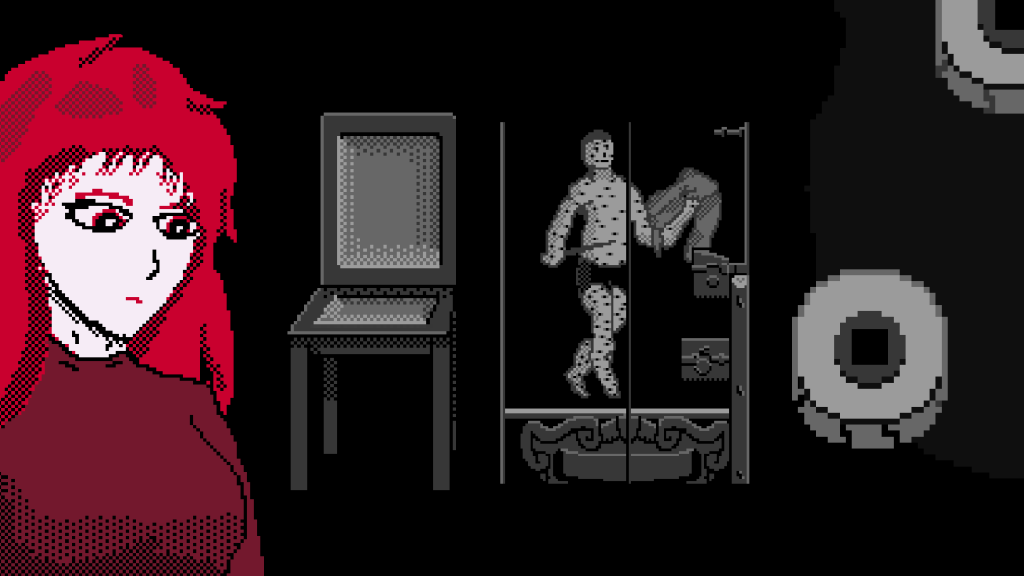
Dorotea: Lore + Making Of (Spoiler alert!)
Hi! On this page I will try to explain the historical and legendary references behind my game Dorotea, as well as show you a bit of the behind-the-scenes of its development.
Versione in italiano
Qui potete leggere la versione in lingua italiana di questo documento
Play Dorotea BEFORE reading this deep dive
If you haven’t played Dorotea yet and you plan to do so, close this page immediately. This section contains insights that will reveal and unravel the entire plot of the game and would ruin the experience.
I invite you, if you haven’t already, to play and/or download Dorotea using these links:
- On my website Pasquiindustry.com
- On Itch.io
- On Newgrounds
- From the Xbox Store
Premise
Dorotea is a mix of truth and fantasy. I combined real places, real people, real historical elements, urban legends, and-mostly-elements from my imagination.
Below I will explain my historical and legendary references and how I modified them, sometimes heavily. I’ll also include additional information about the characters.
IMPORTANT: I am not a historian, and many of these elements were studied and discovered little by little while designing the game. This page is not a source that you should use for historical or topographical research. Moreover, even though I tried to read some ancient maps and personally visited the places I mention, the in-game map is far from being geographically accurate.
Obviously, I did my best to make everything as accurate as possible. I don’t want to disrespect the history and the experts of my city.
Fortunately for me, all the historical elements used in Dorotea date back to the 1600s. Even though they are close in time, some of these elements may not have coexisted in the same exact period.
Credits
The creation of this game would not have been possible without the books, articles, and help of:
- City of Conversano
- Biblioteca Civica Maria Marangelli
- Fax
- ScaffaleWeb
- Barinedita
- The Facebook page: Figli Del Conte
- Wikipedia
- Telebari
- Teleregione
- The website about the lakes of Conversano and Gavina di Monsignore
- The books and the knowledge of Antonio Fanizzi, Michele Lorusso and (In memory of) Pasquale Locaputo and other expert historians
This list does not include credits for some graphic and sound elements I used. Here I only mention those who, through their direct or indirect contribution, helped shape the story of the game.
I also hope I haven’t forgotten anyone or any source.
The Archive
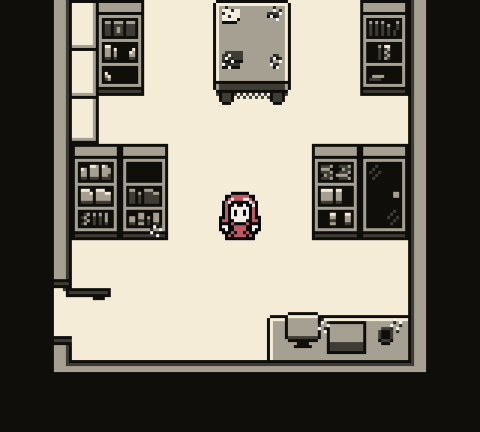
The beginning and the end of the game (you didn’t close it before the end of the credits, right?) are set in this archive, where Dorotea have to to complete her work.
This archive is not a specific place in Conversano. The setting is loosely inspired by the Maria Marangelli Civic Library of Conversano, which I visited for my research.
I take this opportunity to thank the staff. They were very helpful and found extremely useful texts for my research.
Dorotea
The protagonist of the game is inspired (inspired, not directly portrayed) by the witch Dorotea, a real person who lived in Conversano.
The real Dorotea
In real life, she was actually tried and tortured for witchcraft in the 1600s. She lived in poverty and healed people from the evil eye and illnesses, or at least she tried. I don’t think, however, that she had supernatural powers like our protagonist.
I invite you to watch this Teleregione documentary that talks about her story.
I would also like to add that, in the same period, there was another Dorotea: Sister Dorotea Acquaviva d’Aragona. She might be connected to the Porta dei Cento Occhi (Door of the Hundred Eyes), but not to our protagonist.
The protagonist
In my game, Dorotea is introduced as a young woman in her mid-twenties. I didn’t want to give her a precise age for now, so I wouldn’t have to change it in future works.
Dorotea’s professional specialty is the study of the history of her territory. After graduating, she immediately found a job in her city and, as we later discover in the game, among her duties are cataloguing and studying historical artifacts found in the city archives. Obviously, in addition to the history of Conversano, she also knows several languages important for her work: the “Conversanese”/”Barese”, which is a local dialect, and ancient latin.
Here is also a description of the character’s appearance. I don’t think this game will ever become famous enough to inspire some cosplays about Dorotea but, if it happens, you can follow this description:
Dorotea is a typical ginger: long red hair and green eyes. She wears a long monochrome burgundy dress and black boots.
Why red hair?
Since witchcraft was seen as something connected to the devil, I wanted to design Dorotea with red hair. Especially in southern Italy, it’s said that people with red hair can summon and speak with the devil.
As a ginger myself, I can currently say I’ve had no contact with the devil (with the exception of Di4volotv), so we can debunk this myth.
What happens to Dorotea in the past?
In the game, Dorotea is thrown back in time twice. During her “imprisonment,” which will last 40 years, she remains reserved and focused on her mission: breaking the curse. Some townspeople will label her as a witch, not so much for her supernatural powers – which she tries to keep hidden – but for her extensive knowledge. After all, she’s a smart and well educated woman who comes from 2025.
Who knows if we’ll see more of her missions in the future 👀
The PlayStation 3D model
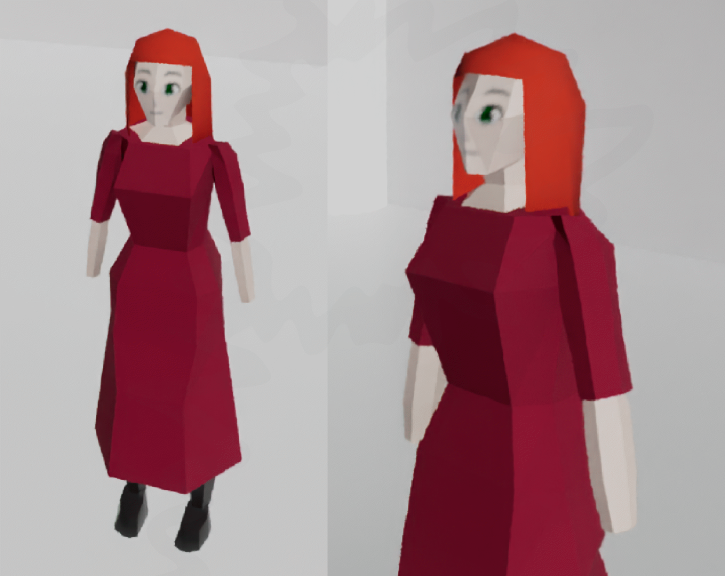
Fun fact: below I’ve attached a render – made on my PC – of the very first version of Dorotea as a 3D model. As mentioned on the game’s page, for the Italocurso Game Jam 2025 I originally intended to publish a game for the first PlayStation.
The protagonist was meant to be the character who later became Dorotea in the Game Boy version. What you see here is my first fully original 3D human model (I already had several years of experience in 3D modeling, but it is limited to interior design).
The render looks a bit strange, both because it was just a test and the rendering software converted quads into triangles, however it did it not very well. Keep in mind that I would have had to use this model on PlayStation hardware, so I couldn’t go too high with the polygon count.
The Door of the Hundred Eyes
If the ItaloCurso Game Jam is the bundle of sticks you put into a bonfire, the Door of the Hundred Eyes is the spark that helped ignite the flame of this game.
This artifact is not my invention: it really exists and is displayed in my city. Even though it’s just a wooden door, what it represents-and how it represents it-is perfect for a game like this. The various content creators who tried my game confirmed this.
The aesthetics of the Door of the Hundred Eyes
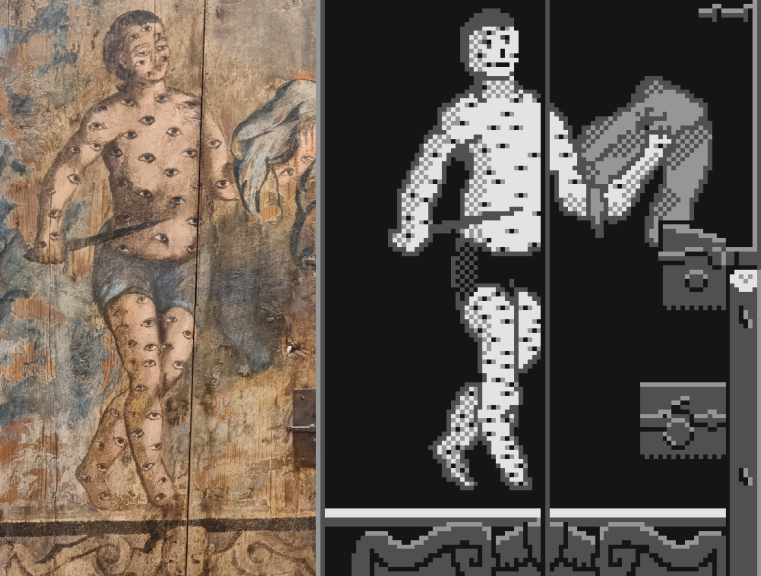
The artifact also dates back to the 1600s and features important locks and decorations, including a Latin inscription and a human figure covered in eyes, wielding a blade in its right arm and wrapped in a cloak around its left arm.
In Dorotea, the character says: “QUI POTEST CAPERE CAPIAT.” This phrase is actually present on the door and can be translated as “He who can understand, let him understand.” (It’s not visible in the image I used, but you can find more complete photos online. As soon as I get permission to use a better photo, I’ll update it.)
Although we call it the Door of the Hundred Eyes, you can only count 75 eyes on the figure. Why? I have absolutely no idea.
Fun fact: in my pixel-art version of the door, I actually included exactly 75 eyes, just like the real artifact.
The discovery of the Door of the Hundred Eyes
In the game, Dorotea finds the door in a storage room abandoned for decades. The real door was also found-50 years ago-in an abandoned storage area, in this case belonging to the Monastery of San Benedetto. The door was then recovered and restored.
When Dorotea wakes up in a strange place, she believes she has ended up in a church crypt. This is a reference to the location where the door was actually discovered.
What the Door of the Hundred Eyes represents
The figure appears to represent the giant Argus, a mythical figure from ancient Greece.
In my game, I wanted to give the Door a dual role: as a guardian of the lives of the Doroteas and as a seal for the cursed elements present in modern times, represented in the game by the chair.
In real life, however, its purpose is less clear, but there are some hypotheses:
- It was used as a guardian, yes, but of the chastity of the nuns housed in the monastery.
- It was used as punishment for sinful nuns and as a warning to the others. The eyes would symbolize syphilitic skin eruptions.
- It was created as the door of the cell of Sister Dorotea Acquaviva d’Aragona. The poor nun was kidnapped by Ridolfo Carafa, Duke of Noja, and taken to Venice, where they married and had a child. Ridolfo died in battle, and Sister Dorotea returned to the Monastery of Conversano, where she was unfortunately locked in a cell.
U’Cont (The Count)
This historical figure is extremely important to the story of my game, even though he is only mentioned in dialogue. We are talking about the Count of Conversano and Duke of Nardò, specifically Giangirolamo II Acquaviva d’Aragona.
Giangirolamo became Count of Conversano in 1626, the year his father died. I wanted to reference his father’s death in the bulky will found among the artifacts analyzed by Dorotea. The County of Conversano was an important feud that covered much of southeastern Bari.
Fun fact: the film Il viaggio della sposa by Sergio Rubini is set in the same period as the game. The destination of the journey is precisely the County of Conversano.
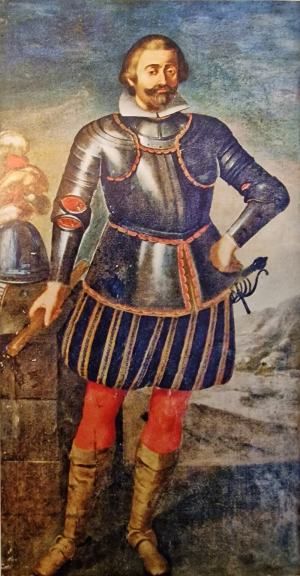
There are many legends about this count. Legends – and partly real history – describe him as a cruel man and a formidable warrior.
It is said that he was “Guercio”, meaning he had a visual impairment. This rumor has never been confirmed by any source. Even though the count is also known as “Guercio delle Puglie” (the One-Eyed of Apulia), it might simply be a transcription error of the title “Guelfo delle Puglie.”
In the following paragraphs, I’ll list the references present in the game connected to the Count.
Ius Primae Noctis
In my game, I included a very subtle reference to this “practice,” which has never been historically verified.
When Caterina discovers that Dorotea came out of a private residence of the Count, she immediately assumes it was for carnal affairs. The line “Well, dressed like that…” is meant to justify Dorotea’s long red dress, a color said to be associated with prostitution.
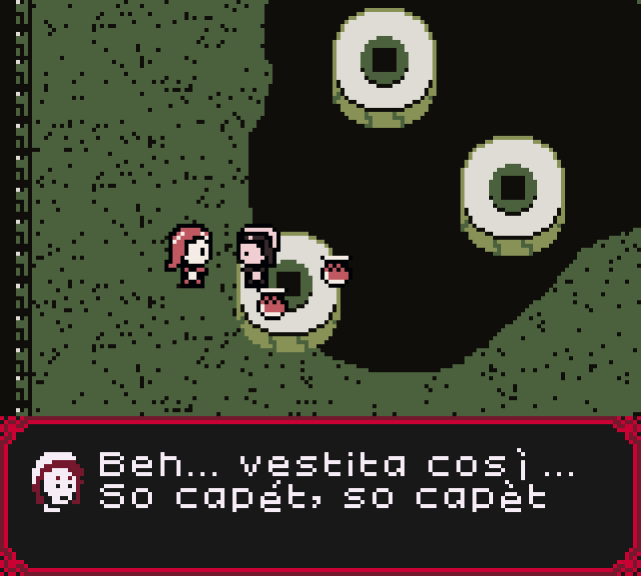
Caterina did the math. RIP.
The Ius Primae Noctis, which I repeat has no historical basis, was the practice of “handing over” the bride to the Count so he could consummate the first night of marriage. Horrible, if true.
I’ll add that we people from Conversano are nicknamed “Figli del conte” for this reason. An example is the ultras group of Pallamano Conversano, one of the most successful handball teams in Italy and, at the time of writing, reigning champions.
The Chair and the Spirits
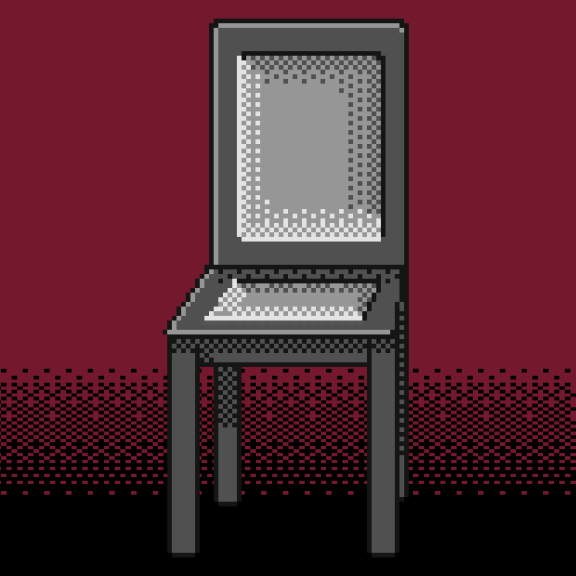
As mentioned earlier, the Count was a formidable, feared, and vengeful warrior.
A legend says that Giangirolamo had his enemies skinned and used their skin to make seats. This allegedly happened during the repression of protests in Nardò.
To add a touch of sci-fi horror and connect it to the role of witches, I merged these elements and imagined this scenario:
“The other witch,” mentioned by the old Dorotea, lived through this civil war on the side of the protesters. She wanted exemplary revenge, trying to strike from within and in a devastating way. To do this, she awakened the cursed spirits of those who fell in battle and other dead persons, drawing them from the Count’s material possessions, especially the seats made of human skin, full with dark matter.
The curse created by this witch was so powerful that it may have gone beyond her control. The first Doroteas in the chain would try to contain these cursed spirits by creating and empowering the Porta dei Cento Occhi. The spirit infused into the door itself and – a conveniently placed bed – allowed the Doroteas to travel safely into the past.
Did I say chain? We’ll get to that later.
As for the design of the chair, since its existence is only legendary, I invented it. I kept it as simple as possible because I’m not very good at drawing…
I was slightly inspired by Nicola Bolla’s Van Gogh Chair. In the game, Dorotea sees the chair and immediately thinks she shouldn’t try it. This is a reference to the incident at Palazzo Maffei in Verona, where a tourist damaged the Van Gogh Chair by sitting on it.
The hidden tunnel
After waking up, Dorotea believes she has ended up in a crypt. What she actually finds herself in is a long corridor/tunnel inspired by the secret passage that – according to legend – the Count had dug to escape on horseback.
There are no sources confirming whether this passage ever existed, so its contents (supplies and corpses) and its destination are entirely invented by me.
Terrarossa (Lake?)
Conversano is a city full of karst sinkholes, designated as a Regional Natural Reserve with high conservation priority by the European Union.
These are fairly large ponds. Many of them are now dry, but centuries ago they were used as water reservoirs and main sources of drinking water.
Technically, Terrarossa is not the name of the lake, which at the time was known as “Lago Fetido” or “Lago of San Salvatore.” Let’s say it’s more the name of the area, although many people from Conversano know where to direct you if you ask about Lake Terrarossa.
So how did the name Terrarossa originate?
The name may derive from another violent and sadistic practice of the Count.
According to oral tradition, he didn’t like women “stealing” water from the wells in the sinkhole. To discourage them-and to practice his aim-the Count would shoulder his arquebus and shoot at the water jars the women carried on their heads.
Obviously, with the weapons of the time, his visual impairment, and the long distance, this often ended in tragedy.
The spilled blood would have stained the soil red-hence Terrarossa.
In the game, we see poor Caterina suddenly get shot in the head by an arquebus.
The cemetery near the lake
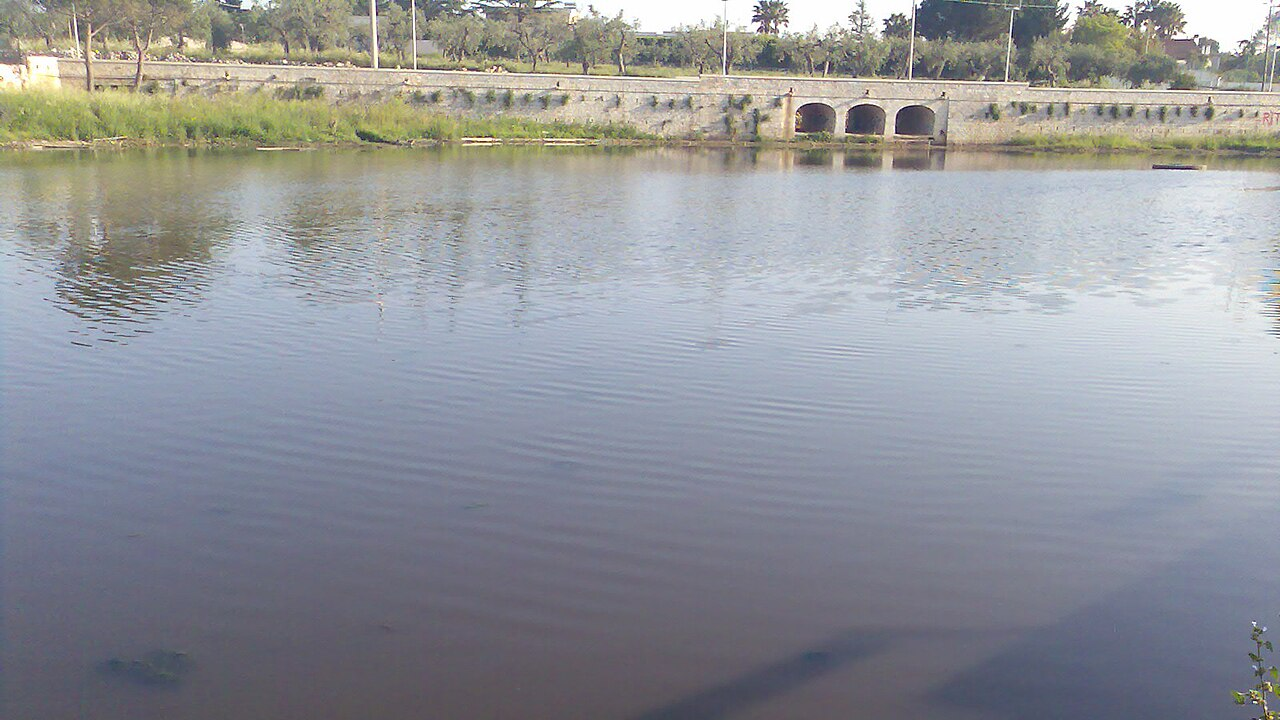
The presence of a cemetery near the lake is based on another legend that tells of a cemetery near Lake Sassano, today the largest and fullest lake in Conversano (the one you see in the photo).
Note: Lake Sassano is quite far from Terrarossa and the Castle of Conversano. While the latter can be considered the city center (near the road to Polignano a Mare), Lake Sassano is more on the outskirts, along the road to Casamassima.
Other quick fun facts
- The interactable element at the beginning of the game is a poster featuring the Cathedral of Santa Maria Assunta in Conversano.
- The computer that the elderly Dorotea checks upon returning to modern times has the Castle of Conversano as its wallpaper. I tried to depict the famous cylindrical tower using just a few pixels.
- Metal pen nibs were invented in the 1600s. They were luxury items, and therefore something the Count could have owned. I use the conditional because this is my invention and hasn’t been proven.
- The 400-year-old fireplace is the only intact element of Dorotea’s home in the past. The fact that Dorotea’s 1600s house and the room with the records coincide is planned by the Doroteas themselves.
Explaining the time loop
The story is full of paradoxes, but I did my best to address them.
Is it a time loop? Did Dorotea create/repair the door? How was the curse born? How does Dorotea “have everything she needs” when she’s sent back 40 years? What universe are we in with the elderly Dorotea at the end of the game?
I’ll try to explain-and justify myself.
Think of the loop as a chain, not a cycle. Pretend Dorotea is a roguelite videogame (like The Binding of Isaac), with multiple timelines where, little by little, the Doroteas try to break the curse and improve the living conditions of the next Dorotea.
Only Dorotea can break the curse, and 40 years aren’t enough. Everything is already planned: a new young Dorotea will arrive to take the place of the elderly Dorotea.
What we experience in the game is just one link in this chain. (Don’t play it 100 times-it won’t change anything, for now.)
It’s not the first link, and it’s not the last. Are we in the middle? We don’t know.
Is Dorotea a demo? Will there be a full version?
Dorotea is a complete game, not a demo. I understand that 10 minutes is very short and that I left you hanging, but the story doesn’t end here.
I already have several pieces of writing connected to this work. I can’t say much yet, both because I don’t want to spoil anything and because I wouldn’t really know what to say.
Of course, I reserve the right to retcon any event that happened in this game.
That said, I’m satisfied. There isn’t much cut content (if we don’t count the canceled PSX version), and I managed to include almost everything I wanted, despite having only a couple of weeks and just a few hours after my actual day job.
Also, expect updates with improved dialogue, graphics, and sound, and releases on more platforms. They will all arrive.